Professional drone filming can create powerful footage, but the best results rarely happen by chance. Behind every strong aerial sequence is planning, judgement and a clear understanding of the environment being filmed.
This matters even more when the project involves maritime, industrial, broadcast or complex environments. In these settings, drone videography is not just a creative task. It has to be planned around people, permissions, movement, weather, access, risk and the purpose of the final content.
For our team at Different View, safe drone filming is part of what makes the footage usable, credible and commercially valuable.
Drone Filming Is More Than Capturing a View
It is easy to think of drone footage as simply a view from above. In reality, professional drone filming should answer a clear question: what does the viewer need to understand?
For a maritime project, the answer might be the scale of a vessel, the layout of a harbour, the movement of a launch or the complexity of a working coastal environment. For an industrial project, it might be site progress, operational flow, infrastructure scale or the relationship between people and equipment.
The drone is only one part of that process. The real value comes from knowing what to capture, when to capture it and how the aerial footage will work alongside ground video, photography, interviews, editing and final delivery formats.
Why Planning Matters in Complex Environments
Complex environments rarely allow unlimited time or unlimited access. A vessel may only move once. A site may only be available during a specific window. An event may have moments that cannot be repeated. Weather, light, tides, crews, permissions and operational schedules can all shape what is possible.
This is why planning is essential. Before a drone filming project begins, the production team needs to understand the location, the objective, the risks and the deliverables. That preparation helps make the shoot more efficient and helps make the final content stronger.
In professional production, safety and creativity are not separate. A well-planned shoot gives the team the control needed to capture better footage.
Permissions and Risk Assessment Protect the Project
Drone filming may involve permissions, airspace checks, landowner approval, site-specific rules and coordination with people on location. The exact requirements depend on the environment, but the principle is always the same: the filming should be controlled, appropriate and safe.
For clients, this matters because poor planning can lead to delays, missed shots or content that cannot be captured at all. In higher-risk environments, it can also create unnecessary disruption.
Working with an experienced drone filming team helps reduce that risk. The team should be able to advise what is realistic, what needs to be checked and how to approach the shoot in a way that supports both safety and the creative objective.
FPV Drone Filming Needs Even More Control
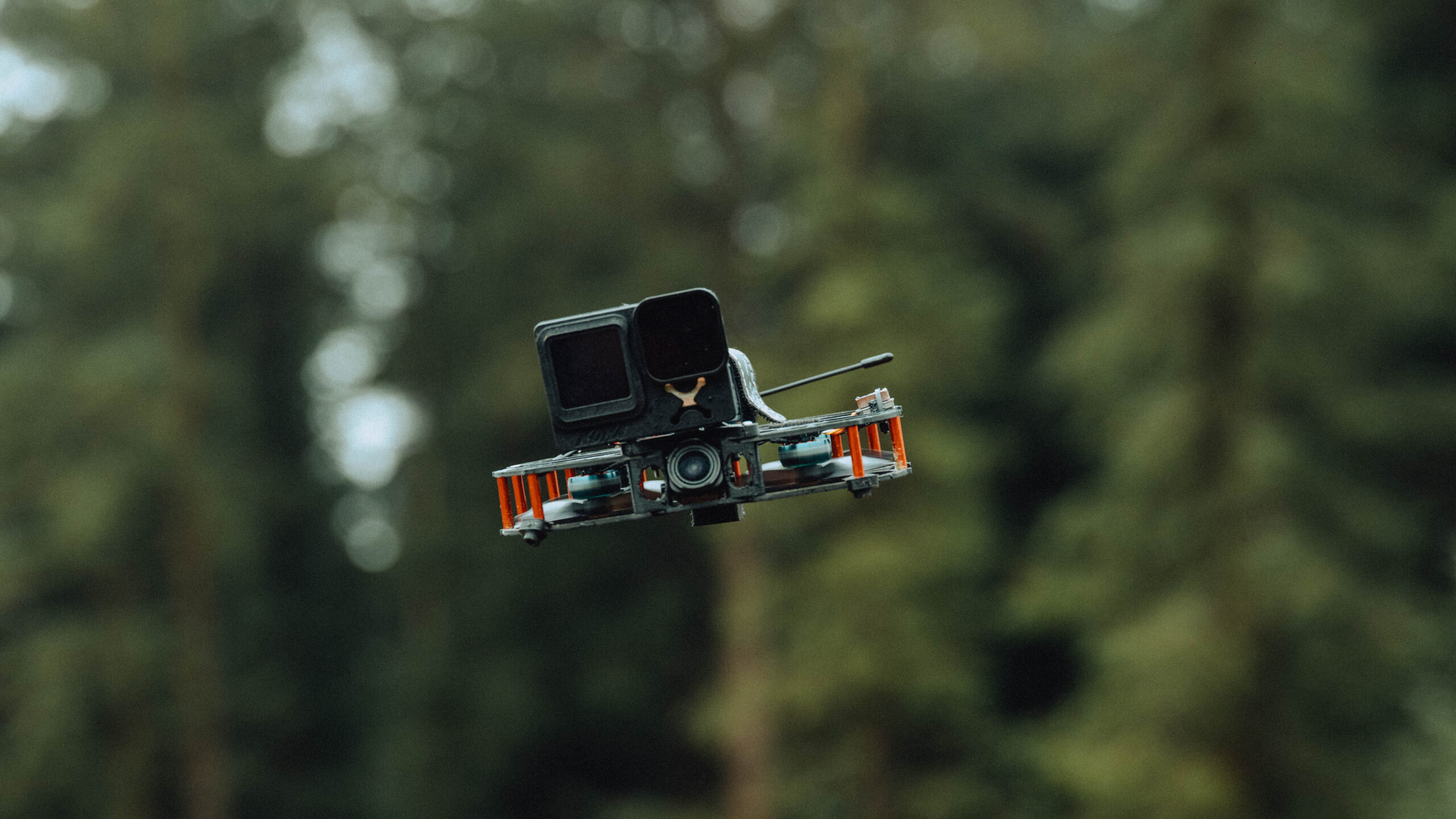
FPV drone filming can create dynamic, immersive footage that standard drones cannot. It can move through spaces, around subjects and close to the action, which makes it valuable for flythroughs, events, industrial sites, marine environments and promotional content.
Because FPV footage often involves closer movement, it needs careful planning. The route, people, obstacles, environment and purpose of the shot all need to be considered before filming begins.
When used properly, FPV can help viewers experience a place with more energy and momentum. But like all drone work, it should be matched to the project rather than added for effect. The best FPV shots feel exciting because they serve the story, not because they are used without purpose.
Safety Helps Build Trust
For many clients, drone videography is part of a wider trust-building exercise. They may be creating content for investors, stakeholders, customers, event audiences, recruitment campaigns or internal communication. The footage needs to look professional, but the process also needs to reflect well on the organisation being filmed.
A safe and structured approach shows that the production team understands the responsibility of working in real environments. This is especially important for maritime, industrial and broadcast clients, where professionalism on site matters as much as the final edit.
When drone filming is carried out properly, it gives clients confidence that the content has been captured with care, control and commercial purpose.
The Right Equipment for the Right Environment
Different drone platforms and cameras are suited to different types of work. A maritime shoot, FPV flythrough, industrial site, event or interview-led production may each require a different setup.
The equipment matters, but only when it is matched with experience and judgement. A larger drone may be right for high-quality aerial coverage, while a smaller platform may be more suitable for tighter or more sensitive environments. Ground cameras, audio, lighting and stabilisation may also be needed to complete the story.
This is why professional drone filming should be planned as part of the whole production, not treated as a standalone add-on.
Better Planning Creates Better Footage
Safe drone filming does not limit creativity. It supports it. When the risks are understood, the permissions are clear, and the filming plan is focused, the team can concentrate on capturing the strongest possible footage.
For us, this approach is central to drone-led visual production. The aim is to create cinematic, useful and credible content for clients working in maritime, industrial, corporate and complex environments.
The final result should do more than look impressive. It should help people understand the project, trust the organisation and take the next step.
Plan a professional drone filming project with Different View.


